Thursday, December 13, 2012
Go Play Outside: In The Cold
I've been wrapping-up the 2012 cleanup season at work. My husband has been working on finishing his houses before the end of the year. Our kids never stop moving and I spend all my non-working moments trying to keep up.
On mornings that I don't work, when I ask my (almost) 4 year-old son what he wants to do with his day, my favorite response is "go for a hike!" My kids love exploring outdoors and I've tried to offer as many opportunties as possible for them to do so. Living in the city doesn't have many built-in opportunties, which makes it hard. But it's not impossible. If we want to play outside--whether we're looking for a playground or the woods--there are a handful of great places within walking distance and a few within just a few minutes' drive. If I'm willing to go an extra 10-15 minutes, we can find a million places to explore.
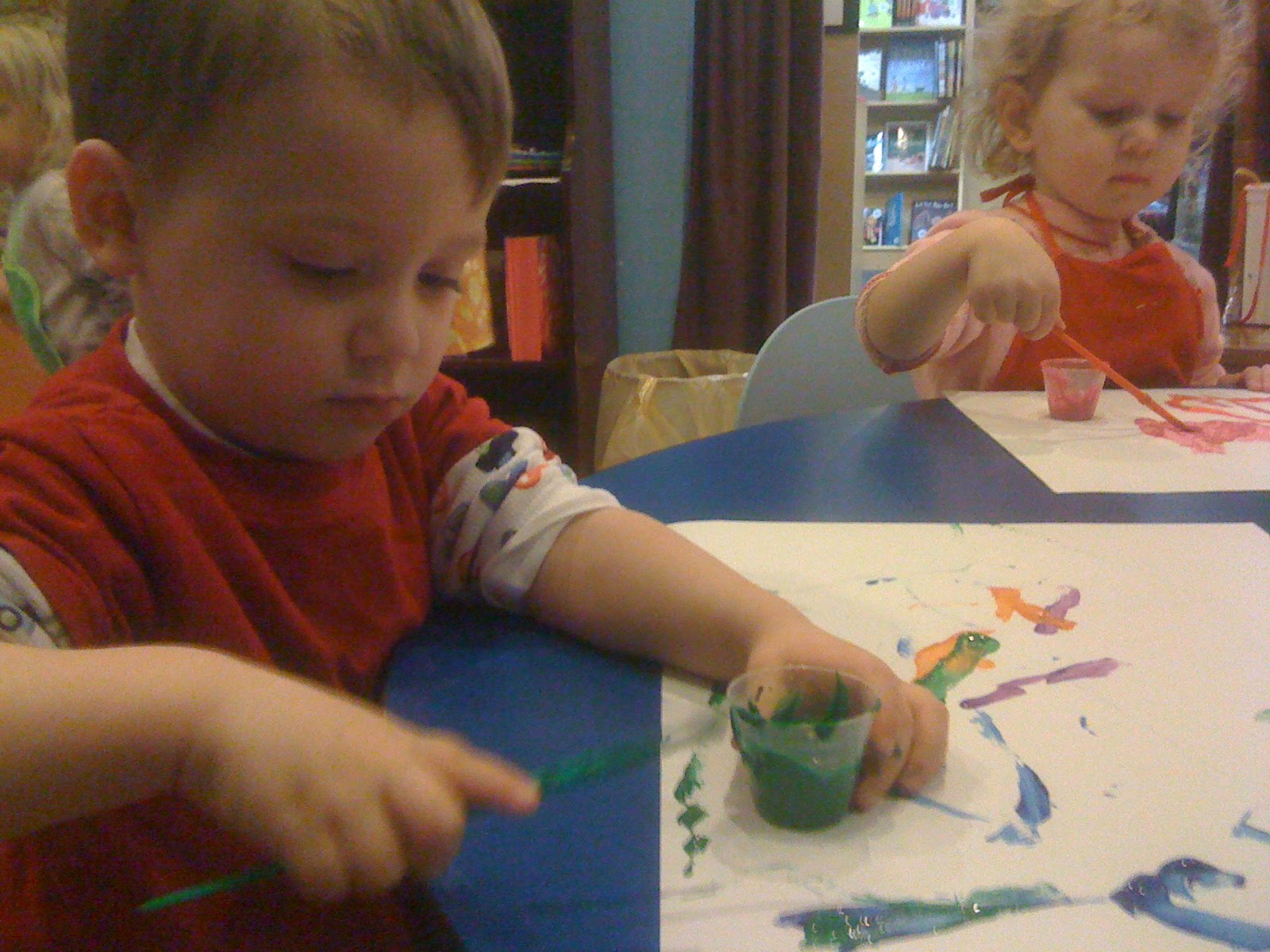
With a few exceptions, this season has still been pretty warm. But I don't anticipate it staying warm all Winter! The trick to keeping kids happy outside in the cold? Layer-up, keep moving, and bring snacks.
Rather than wearing one huge, puffy jacket, invest in multiple layers of clothing that allow you and your kids the freedom to remove only one layer as the sun comes out or your body warms up. Bring hats, mittens, and wear a nice pair of wool socks. Kids who are used to being outside will usually be more adaptable than their parents, so you'll notice your kids become more comfortable in the cold as they get used to dealing with it.
On colder days, find something to do that keeps you all moving (like hiking) so your blood keeps flowing. You might actually be surprised how warm you get! Standing watching your kids play on the playground is sometimes a bore. Every once and a while, pick an activity that gets you moving, too.
As always, kids are very sensitive to hunger. Keep a few small, packable snacks in your pocket or backpack, as well as a bottle of water. If hunger strikes, and your child starts to whine, stop for a quick snack and then get moving again.
Get your kids outside now, while it's still comfortably chilly. You'll be thankful for the practice later, when it's really cold!
In the past few weeks, in addition to our normal neighborhood playground expeditions, we went to Sharon Woods. It was a chilly day, but we took a lovely hike around the lake, which we've never done. We've also been back to Lindner Park in Norwood recently, and we explored a new place in Florence, KY.
The other day, on our way home from running an errand, we visited a park on Linn St. in the West End. It's a tiny little pocket park perfect for my kids' age group. And there's a dinosaur!!
Enjoy the season and GET OUTSIDE!
Monday, April 30, 2012
Go Play Outside: Sharon Woods
Since I moved to Cincinnati nearly seven years ago, I've only gone two years without a Parks pass. But, to be honest, I haven't used any of the passes very often. I usually just consider it a $10 donation to the Park District. This year, though, I'm making an effort to explore the parks with my kids.
Recently, we took two trips to Sharon Woods, which is the park I know best because we have some good friends whose property abuts the park.
Wanna see some photos of trips!?
Friday, February 17, 2012
Check out this AWESOME blog.
Check it out: nyc taught me
Friday, October 14, 2011
Starting "School"
My son is 2yrs and 8 months old. He's super gregarious, energetic, and has a great sense of humor. He also corners the market on creative play these days. But, about a year ago, I noticed that some of my son's peers were surpassing him in learning things like "the ABC's," colors, numbers, and shapes. My son might be able to guide you on the mile long walk through the streets of Over-the-Rhine to the public library, but he can barely count to ten.Tuesday, September 27, 2011
Midpoint Music Festival
I have had mixed feelings about the local phenomenon of Midpoint Music Festival, but they really redeemed themselves for me this year with their Midpoint Midway and CAC-sponsored acoustic stage.
For folks like me who live in the neighborhood, it was a great way to get out of the house and enjoy the event without spending money on a ticket. With two kids at home, the ticket would have been mostly wasted. And, considering the way MPMF takes over our neighborhood for a weekend, it was nice to have this early evening, all-ages, free part of the event. It definitely made up for the noise and parking issues that weekend!We made it down to the Midway three nights in a row. We listened to some acoustic music, watched the skateboarders, and ate some fabulous soft pretzels. The weather was great and my son is still asking me if he can go "see some music" again tonight.
Thanks, Midpoint. Maybe next year I'll buy a ticket.
Monday, August 15, 2011
City Walks with Kids
I would love to see a book like this published for Cincinnati. We do, after all, live in one of the most walkable cities in the country!
Monday, July 18, 2011
They Did Everything Right
Last week, news broke in New York City that an 8 year-old boy had been abducted, then killed and dismembered, after getting lost only blocks away from the place he was to meet his parents that afternoon. His error: he asked the wrong person for directions. That man took advantage of the situation and it ended tragically.
I’d rather not recount all of the details. You can read them for yourself.
As a parent raising children in an urban area, I am already well-aware of the perceived dangers of city life. I know that many of my peers, with children of the same age, think I’m nuts for planting our family here. And I will admit that I sometimes question this decision, as well, counting the cost of all the extra work my husband I and I have to do to keep our family safe and healthy in the city.
But the more time I spend here (we’ve lived in Over-the-Rhine for over three years now and I worked here for the three years before then), the more I am convinced that although there are certain dangers inherent to urban life, many of the dangers inherent to childhood transcend location. No matter where you plant your family, you run the risk of encountering danger. The likelihood of my children being abducted, breaking an arm, drowning in a neighbor’s pool, or getting hit by a car does not significantly decrease the further we are from the city. In fact, depending on where you live, some dangers will increase while others decrease.
On the issue of child abductions, some basic statistics:
- Family members account for the majority of these reported cases (82 percent)
- Non-family abductions account for 12,000 of these reported cases (18 percent)
- Of non-family abductions, 37 percent are by a stranger
Link: http://kidsfightingchance.com/stats.php
In more tangible terms, for every 100 children abducted, 82 are taken by a family member. 18 are taken by a non-family member. And, of those 18, only 6-7 of them are taken by a stranger. Call me crazy, but this says to me that, if your child is ever the victim of abduction, there is 93% chance they are abducted by someone you already know. And, the people you know will be the people you know no matter where you live.
And this is just one example.
As an aside, consider this: as soon as summer hits, the news is littered with tragic stories of children drowning in a neighbor’s pool. I don’t know about you, but I can’t think of a single property within two miles of my home that has a backyard pool. And the two public pools within those two miles are surrounded by high security fences and manned by lifeguards when open for business. So, this childhood danger is actually greatly reduced by living in the city.
The most tragic thing about the boy killed in Brooklyn was not that he was abducted, or that he was killed, or that it happened only blocks away from his intended meeting place. The most tragic thing for me, as a parent, is knowing that his parents did everything right and it happened anyway.
The family lived in an insular Orthodox Jewish community, a community where you’d assume residents were safe and adults were trustworthy. The boy was a month shy of 9 years old and had been begging his parents to allow him to walk home from summer camp alone. This was the first time they’d allowed it and they even walked the route with him, to insure he knew exactly where to go. Somehow, he got lost anyway. And when he stopped to ask for directions, the man he asked happened to be the one person within who knows how many miles who would take advantage of the situation.
I think about my hometown, in the SW suburbs of Chicago. And I think about the twelve or so blocks between my childhood home and my middle school. I think about the millions of times I must have walked that mile when I was eleven years old. And I think about how “safe” it seemed, even though it involved crossing multiple lanes of traffic in a pedestrian un-friendly area.
And then I think about my friend Karen’s home, in Blue Island, IL, which was a far cry from my suburban neighborhood only seven miles away. And I think about riding our bikes around her neighborhood when we were probably no older than ten years old. I think about the first drug deal I ever witnessed. And I think about the stories she told. And I think about the first time I drove through Blue Island as an adult and thought: I can’t believe her parents let us wander around this neighborhood alone!
But now I think I understand.
I think about my neighborhood. I think about the ten blocks between my home and the public library and I think: My son already knows this route and he’s not even three years old. Of course, by the time he’s ten years old, I would assume he’s competent to take this walk alone, even if I wouldn't yet allow it at that point.
The truth is, a good parent knows their child well enough to know when they are ready to “face the world alone.” And the best they can do is trust that they’ve given their child every tool necessary to take care of themselves on that walk down the block, then the walk around the corner, then eventually the walk down to the library. And when something goes wrong, if something goes wrong, chances are that it was nothing the parents could have foreseen and that they did everything right.
This is why it’s tragic when something terrible happens to a child. Regardless of what normal, natural, everyday thing they were doing when the tragedy happened, there is only so much we can do to protect them. And it doesn’t matter where they live. At a certain point, we need to allow them the freedom to take steps out the door alone.
I fear for my son’s life at least a dozen times a day. And my daughter, who is still about three weeks away from being born, is already stressing me out. But I know that, as they grow, the best thing I can do is provide the tools they’ll need to navigate this city without me. And the tools they’ll need here are different than the tools they’d need if we lived in the suburbs, but they are no more or less important. And my neighborhood is no more or less “safe.” It’s just different. The dangers are different. The people are different. The streets and houses and stores are different. And my children will be different because of it. (Heck, that’s part of the reason we’re here.)
The sentiment spoken at the boy’s funeral is perfect for the situation:
“He got lost, he got lost,” he said... “There’s nothing to say, he got lost. God wanted it.”
As a person of faith myself, I can understand what he means. For others, it’s a difficult thing to take in. But the sentiment is something we can all appreciate because it’s true: when something like this happens, there is often a simple explanation for how it happened. In this case, “he got lost.” I’ve been lost before. And you probably have, too. And it happens in the city and in the suburbs and on the hiking trail and in a foreign city. And sometimes you stop to ask the wrong person for directions and you end up more lost than you were before. Or sometimes it ends in tragedy.
Often times, there's simply nothing you should have done differently.
I hope that little boy's parents know that.
Monday, June 20, 2011
Quickening
For one thing, the weather in Cincinnati has been... disappointing... and has kept us inside more than I wish to admit. The perpetual rain has made it hard to feel motivated for the walk to work. And these recent, sudden hot/cold temperature fluctuations have been exhausting. Cincinnati has such fickle weather and I guess I'm more of a fair weather pedestrian than I'd like to admit.
Also, work got really hectic the past few months. Thankfully, my schedule has started to ease as June hit, but my husband is in the midst of the long, busy building season. Lots of late nights. Tired bones. And the end is nowhere in sight. Not for a few months, at least.
Oh, yeah. And I'm pregnant. I'm seven months pregnant at this point, which makes everything just a bit harder and each day a bit longer and every walk feel a bit more exhausting. And having a toddler has made this pregnancy different in every way from my last. And as I anticipate this new arrival, I am mourning how little time I have left to spend alone with my son, my first favorite baby, who will no longer be my "only" in just a handful of weeks.
As far as our city is concerned, the past few months have been a crazy time. The issues of the infamous streetcar and the casino, recent homicides in our neighborhood, businesses opening and closing. If I had not begun reading a Twitter feed with local news and neighborhood conversations, I would be clueless. And still, even with the Twitter updates, I always seem clued-in too late.
I just can't keep up--physically or mentally.
And emotionally, I'm still a few months behind.
And when life moves so fast it can start to lose its charm.
Some friends came for a quick visit a few weeks ago on their way through town.
They are urban dwellers, living in Elgin, IL, a small city near Chicago that I used to call "home." They asked about our work, the politics of the city, the changes in Over-the-Rhine.
My friends seemed so enchanted by our home, our neighborhood, and our family life here in Cincinnati. And when you stop to think about it, I guess we really do have something special here. Sometimes we just move too quickly to notice the small, subtle changes that make this city what it is.
We want change. We want better grocery options, an end to the hostility and violence among neighbors, less litter, fewer loiterers in the public parks, etc. But, sometimes we are so anxious for the big changes in our neighborhood that we forget to notice the small breaths of life that peek up around every corner. Day by day, this city--and the downtown area specifically--is becoming more healthy, viable, and safe. There may be a million naysayers living outside the city limits, but those of us who are here in the thick of it know the truth.
In pregnancy talk, there is a word for the moment a woman can feel the movements of her unborn child. It's called "quickening," and it's a fabulous experience. Personally, it's been the point when I can mentally accept that the thing growing inside of me is REAL, is LIVING, and is becoming more and more AMAZING every day.
As I type, I can feel this baby spinning circles inside of me.
And, while people outside our city are looking for quantifiable changes to prove the viability of Over-the-Rhine, those of us who live here can feel its "quickening."
In fact, this city has been moving for years. But to understand it, you've got to crawl inside it, or put your hand up to its belly and feel it kick. You've got to walk its streets, play in its parks, explore its local flavors and colors. You've got to be willing to know it the way a woman knows her child, the way she nurtures it, the way she leans in and whispers "I know you're in there," and the way she anticipates its birth.
It's a great time to live in this great city.
I hope I can slow down enough some day to take it all in before everything has progressed so far that we can't believe its been so long since those first days when we felt it move.
How long have you been waiting?
And when did you first feel it?
Monday, May 16, 2011
Ode to New York Kids
If You Can Make It Here... 100 reasons to raise kids in NYC
Now, I know that Cincinnati is no New York City, but what's your favorite thing about raising kids here? I gonna start making my list...
Tuesday, March 15, 2011
Things to Love: Winter Survival Toys
Here's my list of things that have gotten us through the Winter and kept us busy on the days when a walk around town is just not an option:
Balance BikeGranted, this toy would not be as effective if my son were already a pro. But, since it's a new toy--his big gift for his second birthday in January--he is only just learning how to ride it and he moves slowly and carefully enough to ride it in our home. Our version of the balance bike is similar to the one shown in the photo and those available at this link, but is not labeled with a brand name. I purchased it on a whim about six months ago when I saw a listing on Craigslist with an unbeatable price for one made by "some European manufacturer" that the seller couldn't recall. (Local favorite Park + Vine sells a version, too!) Either way, we love the bike. It's very well made, looks great, and will be awesome for playing outside this Spring. Also, since the seat moves up and down, it could last us another year, easy.
Play-DohMy husband said his mother never let him play with Play-Doh as a child. She was an art teacher and her taste in materials was far too advanced for the stuff. Heck, I'll admit it. I would have never purchased it for my son. But, a friend gave it to him for his birthday and he ABSOLUTELY LOVES IT. I cannot overstate this: he's crazy over Play-Doh. I, on the other hand, cannot stand the smell of the stuff and have been hunting around for homemade versions to take its place. Since there are a million recipes online, I trust I can find a kinder-scented alternative. But, in the meantime, it's kept him happy for hours these past few weeks.
Library BooksOne of my favorite things about living in Over-the-Rhine is that awesome cultural amenities like the public library are only a short walk away. My son's recent borrows include: a book about Curious George and a firetruck; Dino Parade; a really advanced "Learn German" read-along CD (which we laughed at and then put back in the bag to return on our next trip); Woodie Guthrie's New Baby Train; another adorable book to prepare him for being a big brother called There's Going to Be A Baby; and a book about tubas (at his request). The library isn't only good for books, though. We attend a storytime there on the Monday mornings when I don't work. And there is a computer for him to use (since I won't let him fiddle with mine). Even on cruddy-weather days, the 10 minute walk is bearable when we can spend a ton of time wandering around the library hunting for books for me and books for him. Sometimes we bring a snack; sometimes we stop for a snack on the way home; sometimes we wait until we get home and can crack open a new book while we eat our lunch. Either way, we try not to go more than two weeks between visits to the library to freshen-up on books for both Mama (sometimes Daddy) and son.
Sprig's Eco-TrucksLast year, my mom purchased my son an amazing toy made by Sprig. This company produces toys made from "Sprigwood," a composite of recycled wood and reclaimed plastic. The toys have no painted surfaces, minimal packaging, and don't require batteries for fun. I absolutely LOVED the toy she bought him last year and mentioned that she could purchase him as many toys made by the same company as she wanted. For his birthday this year, she brought him two more of their toys--the Eco-Trucks. Just like their predecessor, he loves them. Learning to manipulate the digger and dump truck's movable pieces has taken some time, but it has also kept him occupied and requires brainpower and coordination. Unlike some other brands of environmentally-friendly toys, we have been impressed by how well the Sprig toys roll and move. And I think they look super cool, too!
What about you?
What has helped you keep your kids occupied during cold and rainy stay-inside weather?
Monday, February 14, 2011
Do This: Blue Manatee kids' programming
When my son was young, before he was fully-mobile, we drove out to the Blue Manatee Bookstore in Oakley every so often so I could grab a cup of coffee with a friend and our kids could peek through some books. Sometimes we'd make it a day trip and stop in to The Spotted Goose and King Arthur's Court Toys.
I haven't been to the bookstore for the past six months or so but, early this morning, I checked the schedule and registered my son for the art class at 10am.
For Cincinnati parents, I would highly recommend a trip to the Blue Manatee, either to browse, catch a storytime, or take a scheduled class. (I believe they host private parties, as well, which I'm going to keep in mind for my mid-winter birthday boy.) Check out the website and find a time to stop in. Heck, you can spend the whole day in Oakley--books, toys, boutique goods, and even a trip to a good ol' soda and ice cream shop!
Enjoy your trip!
Tuesday, February 1, 2011
I Couldn't Agree More
Until I get my act together and write something original, chew on this:
A great article, courtesy of good.is about the value of planning cities with families in mind.
Thanks, GOOD. I couldn't have said it any better.
Sunday, November 14, 2010
Pitching a Tent for Magnet Schools
The competitive nature of enrollment in these magnet schools is understandable. First of all, Cincinnati magnet schools are free for city residents. And because they are sometimes much higher ranked in academics and a bit more culturally refined than neighborhood schools, these schools are a great option for parents who would consider private or parochial schools if it were not for the price.
There is a catch.
Some of these schools are so desirable that they attract too many families. To keep enrollment manageable, CPS has developed a system that requires some pretty serious dedication from the family.
A recent story in the Cincinnati Enquirer covers the phenomenon of the CPS magnet school enrollment process:
"The magnet schools, which generally have high academic ratings and focus on specialties like foreign language or the arts, accept students on a first-come first-served basis. At most schools there is no problem getting in. But at Fairview and a handful of others, lines form days in advance."
I have mixed feelings about this "first-come first-served" policy.
On the positive side, CPS can rest assured that only the most committed families will enroll their children in these highly competitive schools. This obviously contributes to the high academic achievement of such schools, as well as the shared commitment to success. This policy also gives parents the opportunity to provide the best education possible for their children, regardless of financial restraints.
On the negative side, it's not an equitable policy. "First-come first-served" policies like this take a lot for granted. First, that all parents have the possibility of taking 3-5 days out of their lives to camp out on the school's front yard. Second, it presupposes that a child's worthiness in not inherent, but is dependent upon their parents' willingness to go to such lengths.
Another major inequality built into the policy is the way it effects the neighborhood schools. In this system, the children privileged enough to have parents willing to sacrifice for their children are the only ones offered an option outside of their own neighborhoods. Where does that leave the rest?
So, if this system is not an equitable system, what other option do we have?
I do believe that committed parents should be rewarded for their commitment. And I also understand that any parent who wants the best for their child would (hopefully) do whatever necessary to make it happen--i.e. make certain they can be in line when they need to be to secure that spot in their desired school. So, completely tossing out the policy doesn't make sense.
I guess one simple question is this: Why doesn't CPS reserve a certain percentage of the open spots for those who are not able to make it to the front of the line? It seems like this would make everyone happy. The parents at the front of the line would get theirs spots. And the folks at the back of the line would be entered into a lottery for the remaining slots.
Is this already happening?
Am I missing something?
And maybe there is another question to ask:
What is the point of magnet schools?
According to Wikipedia's article on Magnet Schools:
"Districts started embracing the magnet school models in the hope that their geographically open admissions would end racial segregation in "good" schools, and decrease de facto segregation of schools in poorer areas. To encourage the voluntary desegregation, districts started developing magnet schools to draw students to specialized schools all across their districts. Each magnet school would have a specialized curriculum that would draw students based on their interests. One of the goals of magnet schools is to eliminate, reduce, and prevent minority group isolation while providing the students with a stronger knowledge of academic subjects and vocational skills. Magnet schools still continue to be models for school improvement plans and provide students with opportunities to succeed in a diverse learning environment."Can someone with more personal experience in the Cincinnati magnet schools tell me if this is working? My fear is that instead of desegregating the more under-served and impoverished neighborhood schools, magnet schools actually pull the most opportunistic families out of all of the neighborhood schools and leave even mid-income neighborhood schools culturally impoverished. The children who end up in the magnet schools benefit; everyone else suffers.
I don't know that I can offer any better solution to the problems in our public schools. I can understand a parent's desire to provide the best opportunity for their children, so I'm not willing to fault those who stand line for days to secure those coveted kindergarten seats.
My last question:
What would happen if, instead of hand-picking the best regional opportunities for our children, we invested our time and energy in our own neighborhood and community institutions, whether they be educational, cultural, or religious? How would the most disadvantaged children in our city benefit from this local investment by the parents of the most privileged ?
Perhaps what I'm suggesting is not the economic concept of the "redistribution of wealth" but, rather, the redistribution of educational opportunity.
As for our family, my husband and I have some crazy schemes for the education of our children. And I'm not ready to discuss them here. For now, I'm simply going to hope for good weather for those camped out on Clifton Ave, and pray for the welfare of the children whose parents won't show up, but who deserve something better than their neighborhoods can provide.
Friday, November 5, 2010
Go Play Outside: Recycled Playground

Tuesday, October 12, 2010
Go Play Outside: Alone?
I mean, seriously.
Am I willing to let my 10 year old son out in Over-the-Rhine to play, or to walk alone to library for that matter?
The issue of unsupervised youth has come up recently in the news, among friends, and in the parenting class we're involved with at our church. And now we're asking ourselves these same questions again.
When our son is ten years old, who will he play with?
Where will they play?
Will I let them play alone?
There is a lot of talk in parenting circles about the dangers of the modern world. And it's almost comical the steps some parents take to protect their children--everything from fairly benign re-designing of public playscapes to be "safer" for kids to the more ridiculous tracking their movements with GPS chips.
Thanks to some links from CityKin, I have been reading in on the conversations among radical parents across the nation who are defying the modern ideals of a "safe childhood" and are instead raising their children to be wise, independent, and self-reliant in the world. These particular folks call the movement "free-range kids," and have some great things to say about how ridiculous we've become in our quest to protect our children from the "dangers" of the modern world.
I am quick to admit that my husband and I do often question the wisdom of raising children in the city, mostly because of two issues: this apparent need for more supervision in an urban environment and the lack of greenspace and natural areas. But, we decided that the benefits of an urban lifestyle were worth combating these problems rather than allowing them to send us to the suburbs (where we know parents deal with the very same issues, anyway).
For families like us who believe that urban living is inherently better than a sub-urban lifestyle (for multiple reasons which I am always willing to defend, but cannot go into here) and want to know how to keep your children safe without going bonkers about every possible danger, I have a few suggestions:
1. Be realistic about danger.
We all know that life is dangerous, and that there are people and ideas and places that can hurt us lurking around every corner. But, the only real way your children will learn to combat danger is to face it with wisdom and discernment. And if your children are never exposed to uncomfortable or seemingly dangerous situations when they are young and are never forced to navigate their world alone as they grow older, they will never gain the skills in problem-solving and adaptation that will make adult dangers much easier to navigate.
2. Let go. Slowly.
Children who are locked in child-proofed homes or fenced in manicured backyards are given no opportunities to practice the art of trial and error. It is normal and healthy for children--even very young children--to make mistakes. Without falls and bumps and bruises, children never learn to navigate dangers or to correct their mistakes.
Now, there are obvious limits to the dangers we should allow our children to confront at a young age. This is why I say, "Let go. Slowly." But, let common sense be the guild as you allow your child's environment to get a little more risky all the time. Watch them closely for their first few years and you'll see how they naturally adapt to their surroundings and learn skills to confront new problems as they grow.
3. Let kids solve their own problems.
Some examples:
Once your child can climb up and down the stairs, let him. Even if it takes longer.
Once your child can open the door, ask him to open it for you.
Let your son get his own shoes. And put them on, if he can.
Let him figure out where he left his toy, instead of finding it for him.
Give directions and be patient as he tries to follow them. Don't help if he doesn't need help.
Let your child solve petty conflicts with friends on their own, without your mediation.
Allowing young children to clean up their own messes, entertain themselves, do their own work, and solve their own problems will pay off in dividends as they grow older. A child who is competent in his own little world will have an easier time navigating the world outside his front door. He will be more resourceful, more resilient, and more responsible. And since you have watched how competent he is at home, you will be more likely to trust this competence to help him outside of the home.
4. Have a lot of kids.
Now, I understand that most people don't want a dozen children, but hear me out on this. Having multiple children--i.e. built-in playmates--is great for urban living because if your 7 year-old daughter has two older brothers to take her to the park, she doesn't need you to do it.
And if having multiple children is not your cup of tea, you could simply make an effort to get to know other families in the immediate, walkable area. And if there are no other children nearby, or if you don't trust the other families nearby to be with your kids, then you could always start an intentional community. (I'm totally, 100%, serious about this, by the way. No creepy cult-talk intended.)
Basically, the "safety in numbers" scenario is a great way to calm a parent's worry and keep children safe.
5. Get outside.
By "get outside" I mean you should physically leave the house and get outside with your young children to explore your neighborhood. This is helpful for two reasons. First, the best way to decrease "stranger danger" is to have fewer strangers. If your child knows and is known by the local grocer, the woman at the bank, the postal worker, the librarian, and the guy who is always begging for change outside the library, then there will be five more sets of eyes watching him venture out into the neighborhood by himself some day. Stop worrying that everyone in your neighborhood might secretly be a pedophile and get to know them. Learn their names. Introduce your children. And learn what it means to actually be a community.
Secondly, this principle remains true for strange places, not just strange people. If you know your neighborhood, and spend time in and around your neighborhood with your children when they are young, they will know their way around as well as you do. They will know which intersections are busiest, which streets to avoid, which coffeeshops serve the best hot chocolate, and where to buy tissues when they get a bloody nose playing in the park. Teach them how to get to the police or fire station, the library, and the grocery store. Make your environment familiar to your children and they will be a million times more secure and discerning when on their own.
At our home, we are lucky to have a small backyard which will provide at least some opportunity for our young children to play alone outside in a confined environment. But, our small backyard will not be enough for a young boy who wants to ride his bike or organize an ad-hoc baseball game. So, I hope that by the time our son is old enough to venture out of the house by himself, we are ready to let him. And, even if I'm not ready, I want to make sure that he is.
What about you?
Where do you live?
Do you feel safe letting your children out alone to play?
Why or why not?
Food for thought:
Read this story about a radical "holiday" for kids.
Could you do it?
And check this out. Adventure Playgrounds.
Wow. I plan to write more about this, eventually.
Monday, September 13, 2010
Just Your Typical CityKin
Visit it here and then scroll through the rest of his blog for proof that the city really is a great place to live as a family.
On a personal note: It was great to finally meet this neighbors in person while walking home from dinner Friday night. (I met Mrs. CityKin briefly, a year ago, when I answered their providential call on the blog for someone interested in taking their used cloth diapers.) And many thanks to CityKin's wonderful children who sent my son home with two glow-in-the-dark bracelets when we left. He wore them to bed that night and I could see them still glowing early in the morning.
Ahh... the beauty of the pedestrian life and the friends you meet along the way...
Wednesday, September 1, 2010
Things to Love: Bento for a Better Lunch!
Enter: Bento. (or Obento--choose your poison)
In short, Bento is the artful presentation of a meal, but if you're familiar with the concept you know that it isn't quite that simple. I have been familiar with Bento since the summer I spent in Guam a million years back and saw the Japanese culinary phenomenon firsthand. I didn't really understand the breadth of the phenomenon until much later, when I discovered the obsessive side of Bento. (And, man, people take their Bento very seriously, collecting oodles and globs of Bento supplies, entering contests for the best Bento, and I can only imagine having serious anxiety over your average "sack lunch" meals.)
All obsessions aside, Bento is awesome for many reasons:
1. It is potentially waste-free. Not only will parents save on plastic baggies and paper lunch bags by purchasing reusable bento boxes, but the meal itself is free of wrapping and often made from scratch. (i.e. serious Bento parents don't toss a single-serving twix bar in the lunch for good measure)
2. It is a clever way to encourage hearty and healthy meals. So the philosophy goes: when food looks fun, kids are more likely to eat it. Even if a parent doesn't go all-out Bento crazy and make a freaking aquarium for their child's school lunch, some simple Bento tricks can turn a healthy meal into something colorful and inviting. ("Eat me," basically.)
3. It takes less time to eat. Rather than navigating a half dozen ziploc bags during their 15 minutes of lunch, your children can open their box, survey the food in one take, and eat it all up. As our local paper recently pointed out, kids are being given less and less time to eat their meals at school, which leads to lots of waste and (I would assume) a lot of kids skipping to dessert so they don't have to mess with their 1/2lb peanut butter and jelly sandwich that's been wrapped in a yard of tin foil.
4. It's a way to expend some creative energy while loving your family. If you're anything like me, you worry that parenthood has stripped you of your pazazz. I know, I know, a few attractive Bento lunches won't jump start my music career, but they could remind me that I still have that creativity lurking inside me. And, they will remind my children that I love them at the same time. Seriously, who wouldn't feel like a million bucks when they opened their lunch to find this:
If you're interested in adapting a little bit of the Bento philosophy into feeding your family, you can find some tips, tricks, and advice at the following links.
Another Lunch
Lunch in a Box
Just Bento
Locally, you can purchase some basic Bento boxes (like Laptop Lunches) at local favorite Park + Vine. On my next trip to the market, I'll take a closer look at Saigon Market to see what they've got in stock, too. And I'd bet that Jungle Jim's has some interesting Bento supplies, though I haven't been up there in ages...
Monday, August 30, 2010
Kids Not Welcome

Most people, obviously, don't look for a highchair when they walk into a new place. But, from a parent's perspective, the absence of this simple object says one thing to me: Your kids are not welcome here.
I can understand a restaurant owner's fear of becoming a *gasp* "Family Restaurant," and I can understand that a toddler is not their primary clientele. But, I also know that there a very large number of young adults with young children who would love to be able to support these local businesses, but the businesses seem to not want their support.
Yes, I can still sneak in with my son and let him sit on my lap while we both try to eat. And, yes, a booster seat is a step in the right direction. But, a young toddler is much more likely to sit still if seated in a high chair. My son is very well behaved (and we know when our son is not behaving and it's time to leave). Heck, these business owners might actually like having us around!
So,
Dear Business Owners:
I support local business and I'd love to support yours. But, until you are willing to accommodate my small and well-behaved family, you'll be relegated to my "date night" restaurant list. This list is large and not often consulted for dinner plans. Maybe we'll see you (and you'll see our money) in a few years?
Sincerely,
Your neighbor.
(And don't even get me started on coffee shops and gas station bathrooms without diaper changing stations... ugh!)
Thursday, August 19, 2010
Sharing Space in Urban Homes
For those who live alone, are married and child-free, or cohabitate without children, this might not be an issue; one or two people can easily squeeze themselves into a small living space and get comfortable there for a long, long time. But, what about those of us with children? Not just that, what about those of us who want multiple children?
How can a large family (I'm talking about a family with at least two children) find a place that's affordable, while allowing each family member enough room to stretch their legs every once and a while?
Some options to consider:
1. Share your bedroom with an infant/toddler.
My husband and I lived in a loft apartment when our son was born and, therefore, ended up sleeping in the same room as our son for the first 18 months of his life. We started with a co-sleeper attached to the bed, then moved it to the wall next to the bed (4ft away), then to the other side of the room (about 20ft away). This arrangement is not nearly as inconvenient as one might think and comes in really handy for a mother who plans on nursing her children past their first year. In such circumstances, this arrangement is actually more convenient. In our new home, our son sleeps just on the other side of our bedroom door (but usually ends up in our bed at about 6am each morning anyway). Frankly, we have grown accustomed to him being nearby and we like it that way for now.It should not be assumed that, once a couple discovers there is a baby on the way, they must shop around for a two-bedroom home. Sharing a room with your child may not work for everyone, but it's at least worth a shot. You can all be perfectly comfortable sharing a bedroom for a very long time, before you ever need to consider "upscaling." And, when the time comes to shop around...
2. Reconsider "bedroom."
Why does a toddler (or a preschooler, for that matter) need a large bedroom? I can understand a parent's desire to create a space unique to their child. (I feel that desire, too.) But, is a separate room really necessary? Take a quick search through home design blogs and you'll find examples of excellent kids' space built into closets, attics, breakfast nooks, lofts, and other odd places. A child can be afforded plenty of privacy, seclusion, and creativity in any sort of space, regardless of size. (This includes even tiny outdoor spaces, which are often overlooked when it comes to providing space for kids.) When did our idea of "bedroom" expand to include a private library, playroom, bathroom, and walk-in closet? With a little creativity, any extra bit of space can be transformed into a bedroom for a small child! And, when all else fails...3. Think "Bunkhouse."
I grew up in a house where both me and my two brothers each had our own bedroom, so I understand the desire for individuality, privacy, and space. And I know that there are many benefits to living in a large home--especially when considering entertaining guests. But, just because there are benefits to each family member having individual private space, we shouldn't feel like we are neglecting our kids by making them share their bedrooms. In fact, it might be in their better interest to learn to share space now, before they find themselves in their freshman year at college, fighting with their new roommate over whose job it is to wash the window.I've seen some amazing ideas online for shared bedrooms for kids--everything from a preschooler sharing with a newborn, to preteen siblings (a brother and sister, nonetheless) learning to give each other space in a room where space is limited, to four sisters sharing a room well into their teens. From my own experience, thinking of the friends I've known throughout my life who have siblings, it seems that most shared their room at some point in time. I might venture to say that, with some exceptions, most would not have had it any other way. Sharing a bedroom teaches children cooperation, consideration, and aids in bonding. Think: summer camp every day.
Sure, there are some sisters who end up as enemies from childhood spats in their shared room; and there are certainly stories I would have rather not heard about shared boys' rooms. But, we all need to learn to share space eventually and we shouldn't feel guilty if we start our kids young. Heck, they might end up as best friends because of it!
I guess my point is pretty simple:
If we think that a growing families necessitates a growing home (which often insinuates moving out of the city), we are missing out on the ways we can adapt the space we currently have to meet our growing needs.
Why can't a family of four be comfortable in a two-bedroom home?
Why can't a family of six live in a three-bedroom home?
I know that there are obvious caveats to this: to keep the average person sane, there must be at least some private space or some way to get away from the others--a quiet reading nook, a cozy bathroom, a backyard patio. So, that's where creativity comes in!
What's the coolest space adaption you've seen a family make?
Photo credits:
1. Apartment Therapy
2. oh happy day
3. Cookie Mag
Friday, July 9, 2010
Read This: Suburban vs City Living costs
There are a few caveats:
- The cost of paying for private schooling in lieu of public city schools changes the numbers quite drastically.
- The article presumes that the working parent(s) work in the city.
- As stated in the article, sometimes ideology or suburban lifestyle trumps affordability for growing families and they leave the city anyway.
You can read the full article here.
I would love to see the same article written for Cincinnati. My presumption is that the numbers would be the same: for a family whose working parent(s) work in the city, they would save money by living nearer to work. This should be common sense, no?
Maybe I'll write that article, all numbers and statistics included.
Thoughts?